
A L U M N I
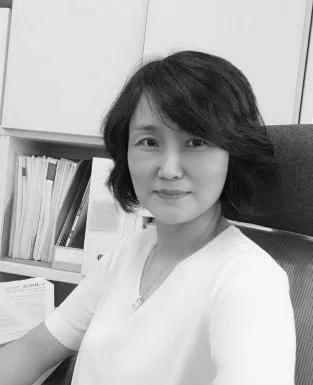
Myung Eun Cho/ PhD
조명은/ 연구교수
After graduating from the Department of Housing and Interior Design at Yonsei University, she received her PhD in House Environment at the same graduate school. She developed products in the R&S (Research and Simulation) team of the LG Electronics Design Institute, and worked as a postdoctoral researcher at the Yonsei University BK21 Core Research Group (Knowledge-based Cyber Housing) and the Department of Architecture at Kyungwon University.
After working as a lecture professor in the Department of Life Science at Konkuk University, she served as a research professor at Kyunghee University’s Department of Architectural Engineering, Sustainable Health Architecture Research Center and Department of House Environment. She is currently working as a research professor at the Construction Research Institute, Hanyang University School of Architecture.
Through her many years of teaching, she has been trying to convey a wide range of knowledge about housing, space, and design to students. She continues to publish papers in national and international journals, undertaking a number of research assignments. Her main areas of interest are housing and communities linked to smart technology, user-centered design to promote health and happiness, spatial design from an emotional and cognitive science perspective, and community-based smart educational spaces.
연세대학교 주거환경학과를 졸업하고 동 대학원에서 주거환경전공 박사학위를 받았습니다. LG전자 디자인 연구소 R&S(Research and Simulation)팀에서 상품 개발을 하였고, 연세대 BK21 핵심 사업단(지식 기반 사이버 주거 Knowledge-based Cyber Housing)과 경원대 건축학과에서 박사후 전문 연구원으로 활동하였습니다.
건국대학교 생활과학과에서 주거전공 강의교수로 근무한 후, 경희대학교 건축공학과 지속가능건강건축 연구센터와 주거환경학과에서 연구교수로 재직하였습니다. 현재 한양대학교 공과대학 건설연구소의 연구교수로 근무 중입니다.
다년간의 강의를 통해 학생들에게 주거와 공간, 디자인에 대한 폭넓은 지식을 전달하고자 노력해 왔으며, 다수의 연구과제 수행을 통해 국내 및 국제 저널에 지속적으로 논문을 발표하고 있습니다. 주요 관심분야는 스마트 기술과 연계된 주거와 커뮤니티, 건강과 행복을 증진하기 위한 사용자 중심의 디자인, 감성 및 인지과학 관점의 공간 디자인, 공동체 기반 스마트 교육 공간 등입니다.
P u b l i c a t i o n
04/ 2022.06 ~ 2025.05.
탐구공동체 기반 스마트 교육공간 모델 개발
-한국연구재단 이공분야
코로나 감염병 확산으로 전국의 모든 대학이 기존의 강좌를 비대면 원격강의로 전환함에 따라 교육의 디지털 대전환이 가속화되었고, 기존의 공간 공유방식에서 벗어나 네트워크와 인프라 공유 시스템을 중심으로 스마트 교육공간이 진행되었다. 본 연구에서는 디지털 환경에서 탐구공동체를 형성하여 창의적인 디자인 문제해결 능력을 향상시킬 수 있는 스마트 교육공간 모델을 개발하고자 하는 것이다. 따라서 본 연구에서는 스마트 교육공간의 특성을 이해하고, 디자인 분야에서의 문제중심학습(problem based leaning), 실천공동체(community of practice) 등의 개념들이 스마트 교육공간에 어떻게 적용될 수 있을지를 파악하고, 끊임없이 변화하는 기술과 미디어에 직면하여 디자인과 학생들의 학습 능력을 향상시킬 수 있는 방법과 향후 변화된 스마트 환경에서의 바람직한 교육 방향과 구현안을 제시하고자 한다.
As all universities across the country converted their existing lectures to non-face-to-face remote lectures due to the spread of the corona virus, the digital transformation of education was accelerated. . This study aims to develop a smart educational space model that can improve creative design problem-solving ability by forming an inquiry community in a digital environment. Therefore, in this study, to understand the characteristics of the smart educational space, to understand how concepts such as problem based learning and community of practice in the design field can be applied to the smart educational space, and constantly In the face of changing technology and media, we intend to suggest a way to improve the learning ability of design students and desirable educational directions and implementation plans in a changed smart environment in the future.
03/ 2019.06 ~ 2022.05.
1인, 2인 가구의 wellness를 위한 스마트 홈/커뮤니티 모델개발
-한국연구재단 이공분야
지금까지 스마트 홈 기술은 노인과 환자의 독립성을 강조하여 신체적 문제를 보완해 주는 중요한 수단으로 활용되어 왔다. 그러나 본 연구에서는 연구범위와 대상을 확대하여 현대 기술의 맥락에서 30대 1인, 2인 가구를 대상으로 이들이 경험하고 있는 여러 가지 생활적, 사회적, 정신적 문제들을 해결하기 위해 physical, emotional, occupational, social, intellectual, spiritual의 다차원적 측면에서 wellness를 지원하는 스마트 홈 모델을 개발하였다. 편리성을 위해 주호 내 첨단 기술 적용을 강조하는 기존의 지능화 주택 연구와는 달리, 주거 내에 적용되는 스마트 기술과 사용자 간의 인터랙션(Human-Computer Interaction: HCI)에 중점을 두고 실제 거주자들의 사용자 경험(User Experience: UX)을 고려하는 지능화 주거연구를 인지과학적인 관점에서 융합적인 연구로 진행하였다. 또한 사용자가 스마트 홈 기술의 주체가 되어 자신의 요구와 필요에 맞춰 기술을 어떻게 조절하고 받아들일지를 파악하고, 단위주거뿐만 아니라 커뮤니티까지 개념을 확장시켜 활용 가능한 서비스를 함께 제안하였다.
Until now, smart home technology has been utilized as an important means to complement physical problems by emphasizing the independence of the elderly and patients. However, in this study, by expanding the scope and subject of research, in the context of modern technology, in order to solve the various living, social, and mental problems experienced by single or two-person households in their 30s, physical, emotional, occupational, We developed a smart home model that supports wellness in the multidimensional aspects of social, intellectual, and spiritual. Unlike the existing intelligent housing research that emphasizes the application of cutting-edge technology in the main house for convenience, it focuses on the smart technology applied in the dwelling and the human-computer interaction (HCI) and focuses on the user experience of real residents. The intelligent housing research that considers Experience: UX) was conducted as a convergence research from the viewpoint of cognitive science. In addition, the user becomes the subject of smart home technology and understands how to adjust and accept the technology according to their needs and needs, and proposes a service that can be used by extending the concept not only to the unit dwelling but also to the community.
02/ 2014.07 ~ 2017.06.
디지털 환경에서의 창의적 문제해결 능력 향상을 위한 디자인 교육 모델 개발
-한국연구재단 인문사회분야
본 연구는 이러한 아파트 입주 시점에 거주자들의 개조 행위에 문제가 있다는 가정에서 출발한다. 따라서 이러한 개조행위의 실태 및 원인을 파악하고 이를 해결하기 위한 공급방식과 디자인 방법을 제시하는데 본 연구의 목적이 있다. 이 연구의 구체적인 연구내용은 다음과 같다. 첫째, 문헌조사를 통하여 현재까지의 아파트 공급방식을 고찰하고 이와 관련된 기존 공동주택의 사용자 참여 디자인 방법의 특성을 파악하고 이를 유형화하였다. 둘째, 사례조사를 통해 공동주택 사용자 참여 방법과 입주 전 개조실태를 파악하고 이에 대한 문제점을 도출하였다. 셋째, 바람직한 공동주택 참여 디자인 방법을 모색하고 이를 활성화하기 위한 공동주택 공급방식을 제시하였다. 아파트 설계 과정에 주민들의 참여를 통해 반복되는 아파트 리모델링의 문제를 해결할 뿐만 아니라 주민들의 다양한 요구를 수용할 수 있을 것으로 예측된다.
This research aims to understand the residents' actual conditions and reasons for remodeling in order to search for the desirable participation design methods, under the assumption that the remodeling of Apartments by their current residents is a problem. The subjects of this research are residents of mixed-used apartments supplied via the fitting form housing supply methods recently. The results are shown below. First, the reasons for remodeling by the current residents are expansion of interior space and change in interior atmosphere. Positive participation of the residents in the design decision is high and this remodeling problem is easily solved. Second, based on the Habraken's SAR theory, supports units and variable units were separated and in each process rational and systematic design methodologies according to the role and responsibility of the residents were observed. Third, considering the great level of remodeling right before moving in, there is a need for the variable housing supply methods of residents to easily participate in the design, construction, and supply of the apartments. Through the participation of the residents in the apartment design process will not only solve the problem of repeated apartment remodeling, but also accommodate the various needs of the residents.
01/ 2002.09 ~ 2003.08.
공동주택 입주시점의 개조행위를 통한 거주자들의 참여 디자인 방법에 관한 연구
-한국연구재단 박사후연구과정
본 연구는 이러한 아파트 입주 시점에 거주자들의 개조 행위에 문제가 있다는 가정에서 출발한다. 따라서 이러한 개조행위의 실태 및 원인을 파악하고 이를 해결하기 위한 공급방식과 디자인 방법을 제시하는데 본 연구의 목적이 있다. 이 연구의 구체적인 연구내용은 다음과 같다. 첫째, 문헌조사를 통하여 현재까지의 아파트 공급방식을 고찰하고 이와 관련된 기존 공동주택의 사용자 참여 디자인 방법의 특성을 파악하고 이를 유형화하였다. 둘째, 사례조사를 통해 공동주택 사용자 참여 방법과 입주 전 개조실태를 파악하고 이에 대한 문제점을 도출하였다. 셋째, 바람직한 공동주택 참여 디자인 방법을 모색하고 이를 활성화하기 위한 공동주택 공급방식을 제시하였다. 아파트 설계 과정에 주민들의 참여를 통해 반복되는 아파트 리모델링의 문제를 해결할 뿐만 아니라 주민들의 다양한 요구를 수용할 수 있을 것으로 예측된다.
This research aims to understand the residents' actual conditions and reasons for remodeling in order to search for the desirable participation design methods, under the assumption that the remodeling of Apartments by their current residents is a problem. The subjects of this research are residents of mixed-used apartments supplied via the fitting form housing supply methods recently. The results are shown below. First, the reasons for remodeling by the current residents are expansion of interior space and change in interior atmosphere. Positive participation of the residents in the design decision is high and this remodeling problem is easily solved. Second, based on the Habraken's SAR theory, supports units and variable units were separated and in each process rational and systematic design methodologies according to the role and responsibility of the residents were observed. Third, considering the great level of remodeling right before moving in, there is a need for the variable housing supply methods of residents to easily participate in the design, construction, and supply of the apartments. Through the participation of the residents in the apartment design process will not only solve the problem of repeated apartment remodeling, but also accommodate the various needs of the residents.